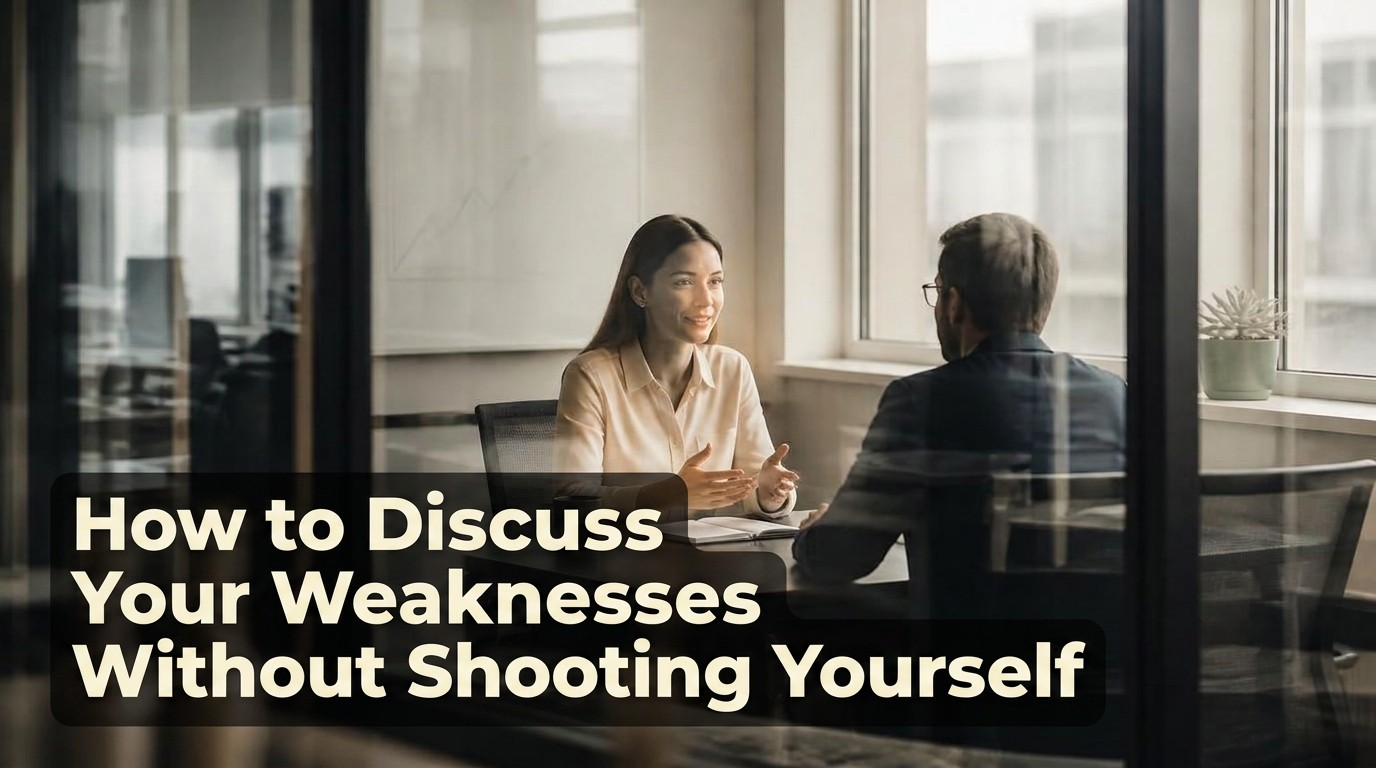
According to Glassdoor Recruiting Manager Candace Bracher, “What is your greatest weakness?” is one of the three interview questions candidates flub more than any other — right up there with “walk me through your resume” and “do you have questions for us?” And it makes sense once you know what’s actually being measured: organizational psychologist Tasha Eurich’s research, published in Harvard Business Review, found that while 95% of people believe they’re self-aware, only 10 to 15% actually are. This question exists to find out which group you’re in.
Most candidates respond to that pressure by hiding. They reach for “I’m a perfectionist” or “I work too hard” — answers so transparently fake that interviewers can recite them before you finish the sentence. The irony is that this instinct to protect yourself is exactly what costs candidates the job. Research on authenticity and interviewing tells a different story entirely: candidates who share a real weakness with a clear improvement plan are consistently rated as more trustworthy and more hireable than candidates who dodge the question with a polished non-answer.
This guide will show you exactly how to answer the greatest weakness interview question — where the real danger zone is, a simple framework for building your answer, and 15 example weakness answers across different roles so you can see what a strong, honest response actually sounds like.
Why “I’m a Perfectionist” Is Instantly Recognized as a Non-Answer
Before you build your answer, it helps to understand exactly what’s going wrong with the answer most people default to.
What Interviewers Are Actually Listening For
Interviewers aren’t hoping to catch you out. According to Bracher, the question is designed to gauge honesty and self-awareness — not to collect a list of your flaws for some kind of scorecard. A good answer, in her words, is honest but “mindful not to overshare,” and makes clear the weakness won’t interfere with your ability to do the job.
Management author Suzy Welch breaks the ideal answer down into four qualities interviewers are quietly scoring:
- Self-awareness — do you actually understand your own patterns?
- Authenticity — does the weakness sound real, or rehearsed?
- Discretion — do you know the line between a professional weakness and an overly personal one?
- Initiative — are you doing something about it, or just naming it?
Welch is blunt about what happens when candidates skip all four and reach for a cliché instead: answers such as “I’m a perfectionist” or “I’m a workaholic” read as phony rather than self-aware.
The Disguised-Strength Trap
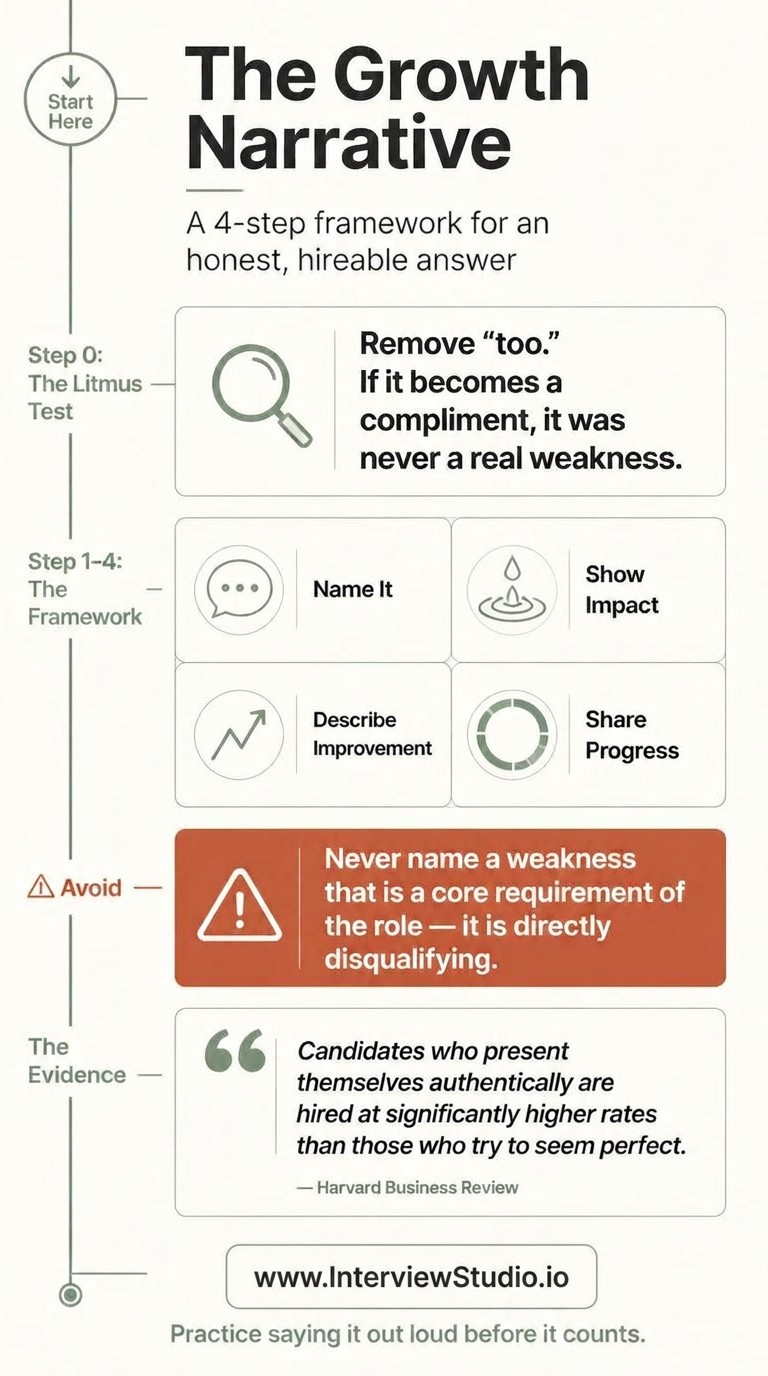
Here’s the giveaway that exposes almost every fake weakness answer: remove the word “too,” and it becomes a brag.
- “I work too hard” → “I work hard.” Not a weakness.
- “I care too much about quality” → “I care about quality.” Not a weakness.
- “I’m too much of a perfectionist” → “I’m a perfectionist.” Still not a weakness.
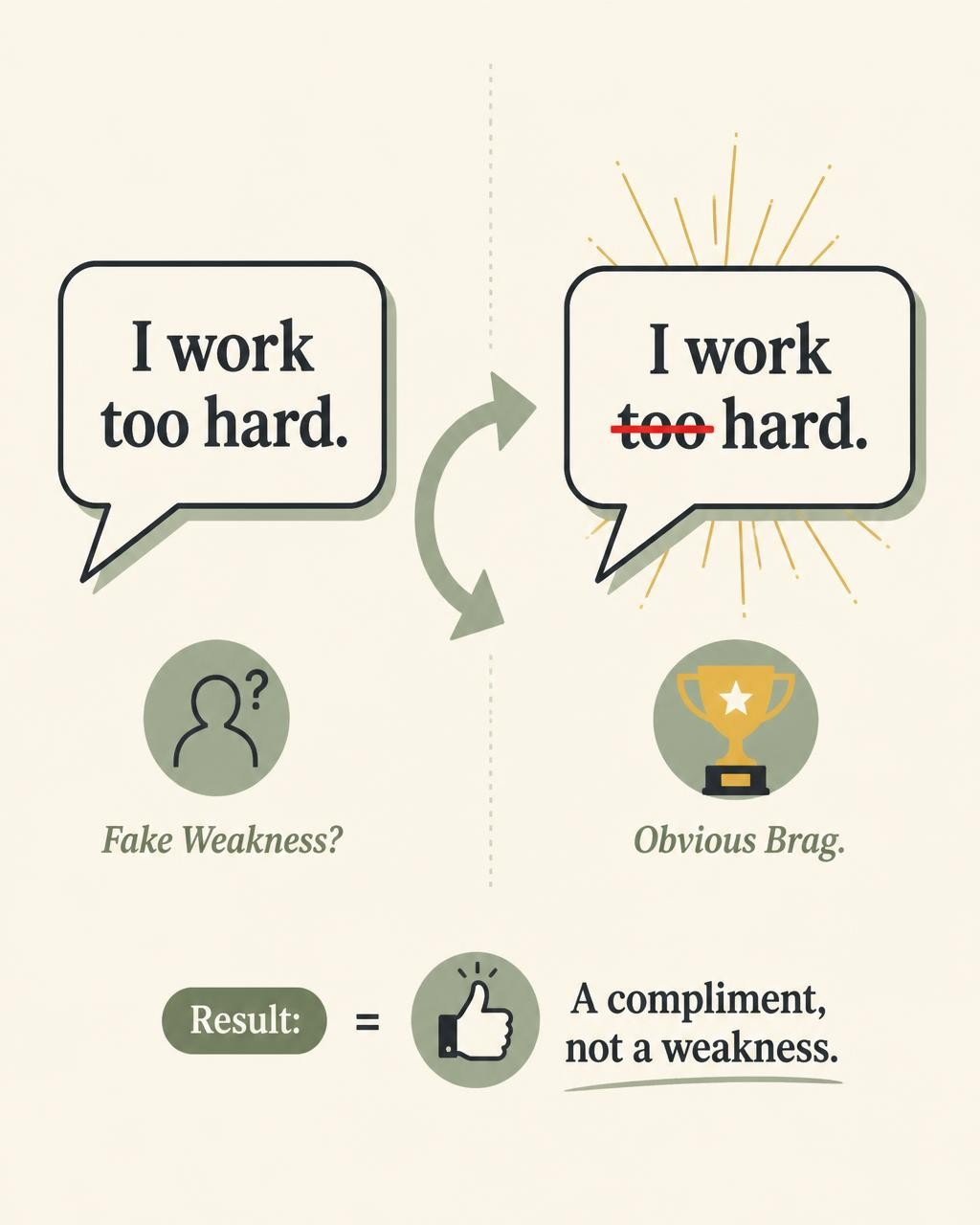
Career coach Alison Green, who runs Ask a Manager, puts it sharply: interviewers widely recognize “perfectionism” and “working too hard” as disingenuous answers. Hearing the same cliché again tells them you weren’t willing to be honest.
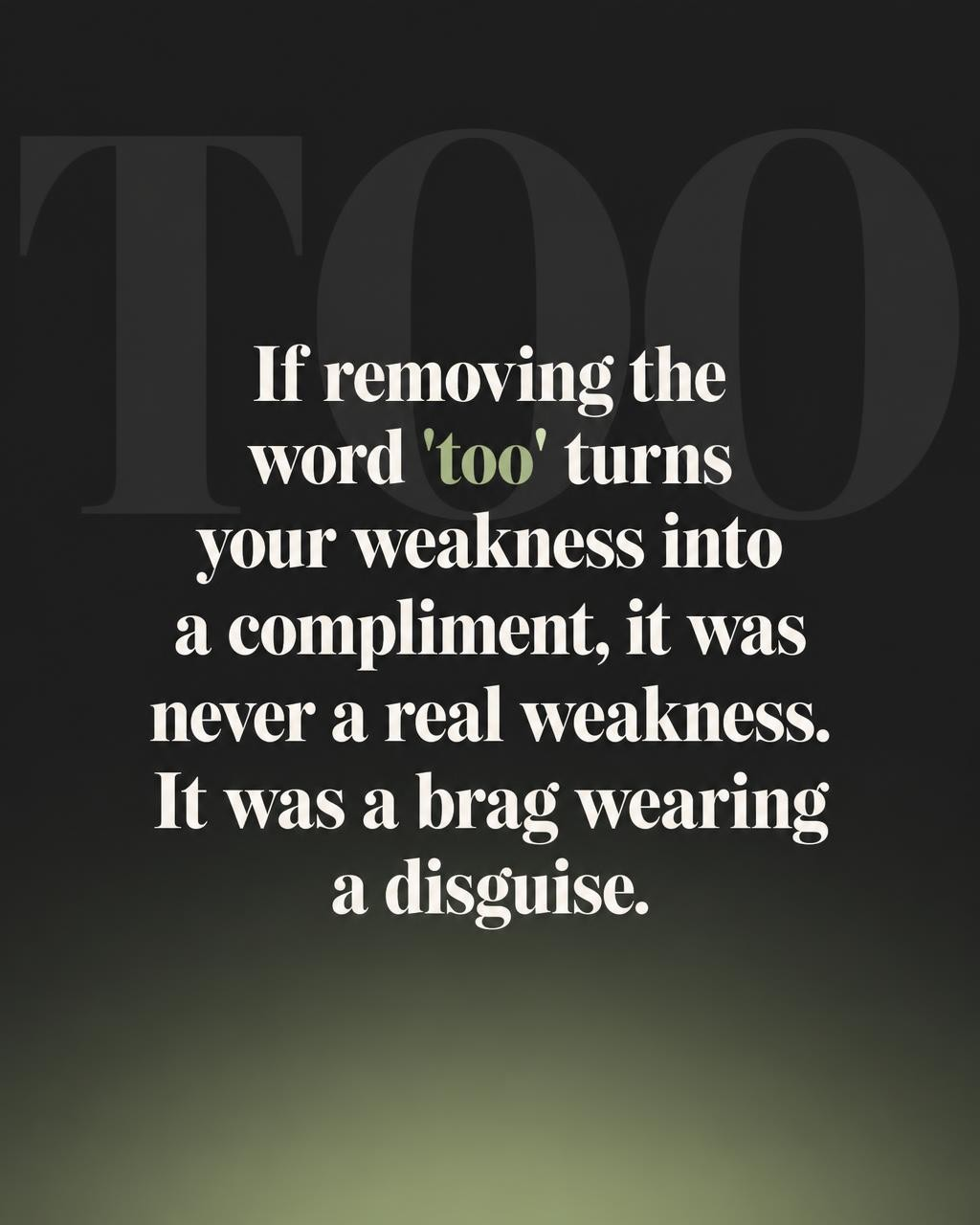
If removing the word “too” turns your weakness into a compliment, it was never a real weakness. It was a brag wearing a disguise.
The Counterintuitive Truth: Honesty Beats “Perfect” Answers
Here’s the part most interview advice skips entirely, and it’s genuinely surprising: being vulnerable about a real weakness makes you more likable, not less — as long as you’ve already shown you’re competent.
The Research Behind It
A 2022 study out of Harvard Business School, later summarized in Harvard Business Review, found that when leaders revealed a genuine weakness, observers rated them as more authentic — because the disclosure signaled they weren’t just managing an image. That authenticity, in turn, made people more interested in working with them.
A separate study out of UCL and Bocconi University, published in the Journal of Applied Psychology, tracked real hiring outcomes and found something striking: among a group of teachers, candidates with a strong drive toward authentic self-presentation saw their odds of getting hired jump from 51% to 73%. Among a group of lawyers, authentic self-presentation raised offer rates from 3% all the way to 17% — nearly six times higher. Lead researcher Dr. Celia Moore summarized the finding directly: “In a job interview, we often try to present ourselves as perfect. Our study proves this instinct wrong.”
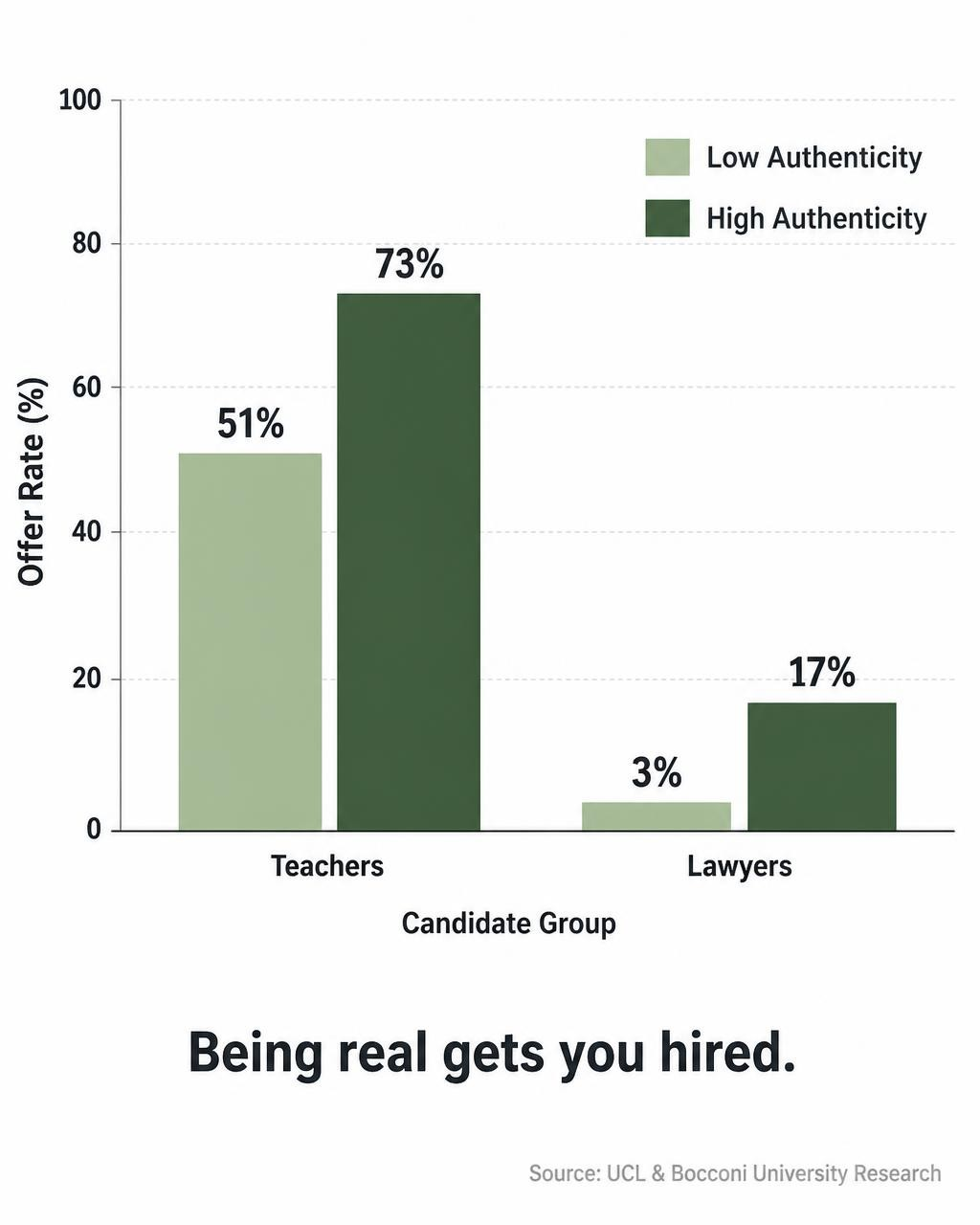
There’s an important catch, though, and it’s the one piece most people miss: this effect only helps candidates who are genuinely competent. This traces back to a classic 1966 psychology finding known as the pratfall effect — when a clearly skilled person makes a small, human mistake, people like them more. But when someone of average or unclear skill makes the same mistake, it just makes them look less capable.
What this means for you: establish your competence first — through your resume, your other answers, your specific results — and then a real, well-handled weakness reads as authenticity. It’s competence plus vulnerability that lands well, not vulnerability alone.
The Growth Narrative Framework: How to Structure Your Answer
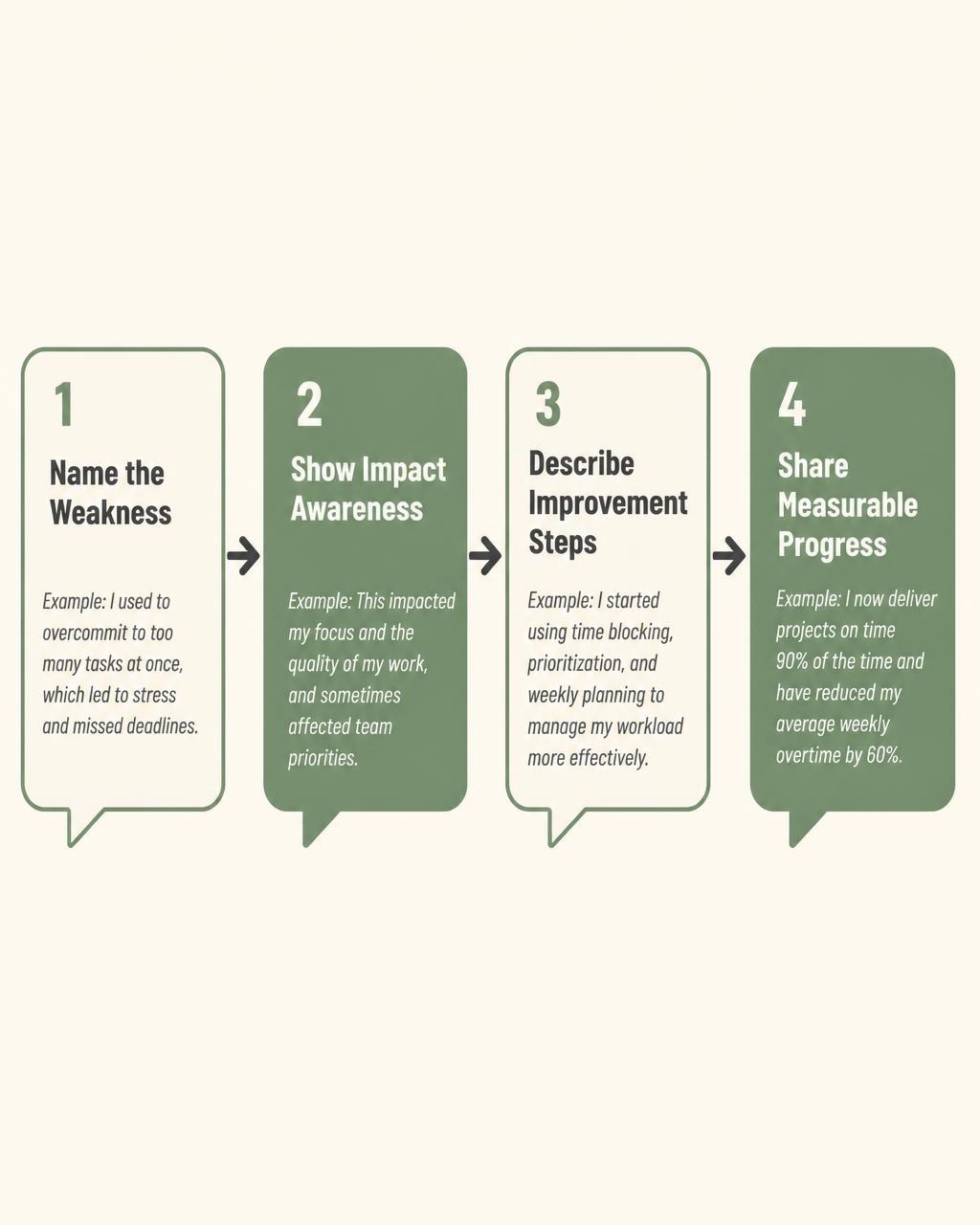
Once you understand what interviewers are actually listening for, building a strong answer becomes a matter of following a simple, repeatable structure. This is the Growth Narrative approach, and it has four parts.
- Name a genuine weakness. Something real, specific, and — critically — not central to the job you’re applying for.
- Explain your awareness of its impact. Show that you understand how this weakness has actually affected your work, not just that it exists in the abstract.
- Describe specific steps you’ve taken to improve. This is the part that separates a real answer from a confession — action, not just acknowledgment.
- Share measurable progress. A concrete result, even a small one, proves the improvement is real and ongoing.
A Full Example, Structured
“One thing I’ve had to actively work on is public speaking. Earlier in my career I’d avoid presenting to leadership whenever I could, which meant good ideas from my team weren’t getting the visibility they deserved. I joined a Toastmasters group about a year ago and started volunteering to lead our weekly stand-ups. It’s still not my most natural skill, but I now lead our monthly stakeholder updates without the anxiety I used to have — and my manager has specifically called it out as a growth area I’ve closed.”
Notice the shape: real weakness, honest impact, concrete action, measurable result. Nothing in that answer is a disguised strength, and nothing in it disqualifies the candidate from the role. For answers about past situations, the STAR method gives you a complementary structure for keeping the supporting story focused.
The Line Between Vulnerability and Self-Sabotage
There’s a real risk on the other side of this advice too. In trying to avoid sounding fake, some candidates overcorrect into being too honest — and hand the interviewer a legitimate reason to worry.
Never Name a Core Requirement of the Role
This is the single most damaging mistake a candidate can make with this question, and it’s avoidable. If the weakness you name is something the job description lists as essential, you’ve just disqualified yourself out loud.
- Naming “attention to detail” as your weakness for an accounting or finance role is directly disqualifying — precision is the job.
- Naming “collaboration” or “working with others” as your weakness for a team-based role signals you’ll struggle with how the team actually operates day to day.
- Naming “writing” as your weakness for a content or communications role undercuts the core skill you’re being hired for.
- Naming “attention to dosage/detail” as a weakness in healthcare or safety-critical roles raises a genuine safety concern, not just a hiring one.
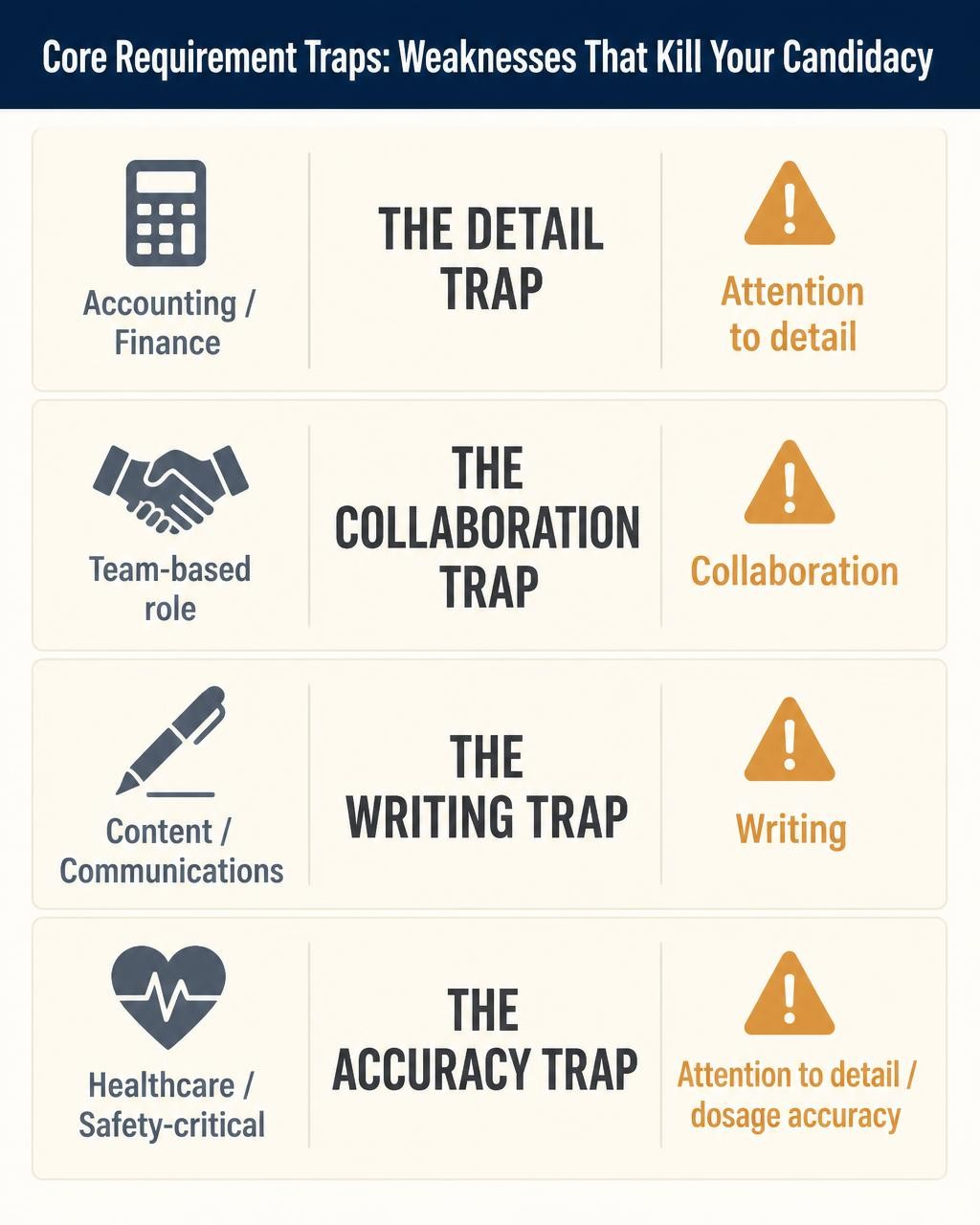
Career resource Interview Kickstart is direct about this: naming a core requirement as your weakness is “directly disqualifying.” The fix is simple but requires a bit of preparation — cross-reference your weakness against the job description before the interview, and if there’s any overlap with a listed requirement, choose something else.
Don’t Wallow, and Don’t List Multiple Flaws
The opposite mistake is oversharing. Avoid weaknesses that suggest unreliability (“I miss deadlines,” “I get overwhelmed easily”) and avoid turning your one answer into a laundry list. One well-chosen weakness with a real improvement story is more convincing than three vague ones.
A weakness that matches the job’s core requirement isn’t self-awareness — it’s a resignation letter you haven’t sent yet.
15 Example Weakness Answers Across Roles and Industries
Below is a range of strong answers — built on the Growth Narrative structure — alongside the weak version many candidates default to for the same role. Use these as a model, not a script; your real answer should reflect something genuinely true about you.
- Sales — ✅ “I used to get impatient when a deal took longer than expected. I’ve since built a structured follow-up cadence that keeps me disciplined through longer sales cycles, and my close rate on longer deals has improved as a result.” ❌ “I care too much about hitting my numbers.”
- Software Engineering — ✅ “Early on, I’d hesitate to ask clarifying questions because I didn’t want to seem behind. That led to rework more than once. Now I check in on requirements early, even if it feels like a small question, and it’s saved my team real time.” ❌ “I’m not very good at writing code.” (Core requirement — avoid.)
- Data Analysis — ✅ “I used to over-polish reports before sharing them, which slowed down decisions that needed to move fast. I’ve shifted to leading with the key insight first and refining after, so stakeholders get what they need on time.” ❌ “I struggle with interpreting data.” (Core requirement — avoid.)
- DevOps — ✅ “I’m still building depth in Kubernetes compared to the rest of my stack. I’ve been working through the CKA certification curriculum and applying it to a personal project, and I’m noticeably faster at troubleshooting cluster issues than I was six months ago.” ❌ “I find deployment automation stressful.” (Core requirement — avoid.)
- Marketing — ✅ “I used to spend too long perfecting creative before shipping it, which pushed back launch timelines. I now set revision limits and time-boxes for myself, and my last three campaigns have all launched on schedule.” ❌ “I’m a perfectionist with campaigns.” (Disguised strength.)
- Customer Service — ✅ “I used to take frustrated customer complaints personally, which was draining and not sustainable. I’ve learned to separate the emotion from the problem and focus purely on resolution, and my resolution-satisfaction scores have gone up since.” ❌ “I find it hard to stay patient with customers.” (Core requirement — avoid.)
- Finance / Accounting — ✅ “Presenting numbers to stakeholders used to make me genuinely uncomfortable, and I’d rush through it. I joined Toastmasters and now lead our monthly numbers review, and I’ve had positive feedback on clarity from leadership.” ❌ “I struggle with attention to detail.” (Directly disqualifying — avoid.)
- Management / Team Lead — ✅ “I used to hold onto tasks longer than I should have because I wanted them done to my exact standard. I realized it was creating bottlenecks for my team, so I’ve deliberately built a habit of delegating earlier and coaching instead of redoing work myself.” ❌ “I’m not great at collaboration.” (Core requirement for a team role — avoid.)
- Communications / Writing-Heavy Roles — ✅ “Written communication wasn’t naturally my strongest skill coming out of school. I took a business-writing course and made it a habit to draft our weekly team updates, and it’s become one of the things I get the most positive feedback on now.” ❌ “I’m bad at writing.” (Core requirement — avoid.)
- Nursing / Healthcare — ✅ “During high-volume shifts I used to feel overwhelmed trying to keep everything moving at once. I’ve since adopted specific prioritization techniques and stress-management practices, and I stay noticeably calmer and more organized during busy periods now.” ❌ “I sometimes make mistakes with dosages.” (Safety-critical, directly disqualifying — avoid.)
- Healthcare — Delegation — ✅ “I used to hesitate to delegate tasks because I wanted to personally ensure quality of care. I’ve been working on trusting and coaching my team more, which has actually improved our overall patient response times.” ❌ “I don’t connect well with patients.” (Core requirement — avoid.)
- Entry-Level / New Graduate — ✅ “I tend to get discouraged when I don’t pick up a new skill quickly. I’ve learned to break new skills into smaller milestones so I can see progress along the way instead of judging myself against instant mastery.” ❌ “I don’t really have any weaknesses.” (Reads as low self-awareness — avoid.)
- HR / People Analyst — ✅ “I’m not naturally someone who ‘sells’ ideas with a lot of energy — I’m much stronger at laying out the facts clearly so people can make their own informed decision. I’ve been working on adding a bit more persuasive framing when the moment calls for it.” ❌ Naming your core analytical or data skill as the weakness — avoid.
- Executive / Leadership — ✅ “Earlier in my career I over-indexed on being the expert in every room, which meant I wasn’t developing the leaders under me as fast as I should have. I’ve built a deliberate habit of stepping back and asking questions instead of providing the answer, and my directs have taken on noticeably more ownership since.” ❌ “I’m too driven” or “I work too hard.” (Disguised strength — especially damaging at senior levels, where self-awareness is expected.)
- Administrative / Operations — ✅ “I used to say yes to too many extra requests, which spread my time thin across priorities. I’ve since built the habit of assessing my workload honestly before committing and pushing back respectfully when needed, which has made my output more consistent.” ❌ “I get overwhelmed and miss deadlines.” (Signals unreliability — too honest without a clear resolution.)
Once you have your weakness story, strengthen the rest of your case with a clear answer to “Why should we hire you?” from the hiring manager’s perspective.

Key Takeaways
Answering “what is your greatest weakness” well isn’t about finding a clever way to hide a flaw — it’s about proving you’re the self-aware, honest person the role actually needs. To recap:
- “I’m a perfectionist” and “I work too hard” are instantly recognized as fake — if removing the word “too” makes it a compliment, it isn’t a real weakness.
- Interviewers are testing honesty and self-awareness, not collecting a list of your flaws to hold against you.
- Genuine, well-handled vulnerability outperforms a “perfect” non-answer — but only once you’ve shown you’re competent.
- Use the Growth Narrative: name a real weakness → show you understand its impact → describe specific improvement steps → share measurable progress.
- Never name a core requirement of the role as your weakness — cross-check against the job description before you walk in.
The best weakness answer isn’t the most impressive-sounding one. It’s the most honest one you can back up with real, specific evidence of growth — and the more comfortable you get saying it out loud, the less it will feel like a trap. If nerves make it hard to deliver naturally, use these techniques to manage interview anxiety before it takes over.
Practice Your Growth Narrative Out Loud
Finding the right words for your weakness answer is easier on paper than it is out loud, under real pressure. Practice with an AI interviewer that listens and asks genuine follow-up questions, so your Growth Narrative comes out sounding natural — not rehearsed — when it actually counts.
Start Your Free Mock Interview